

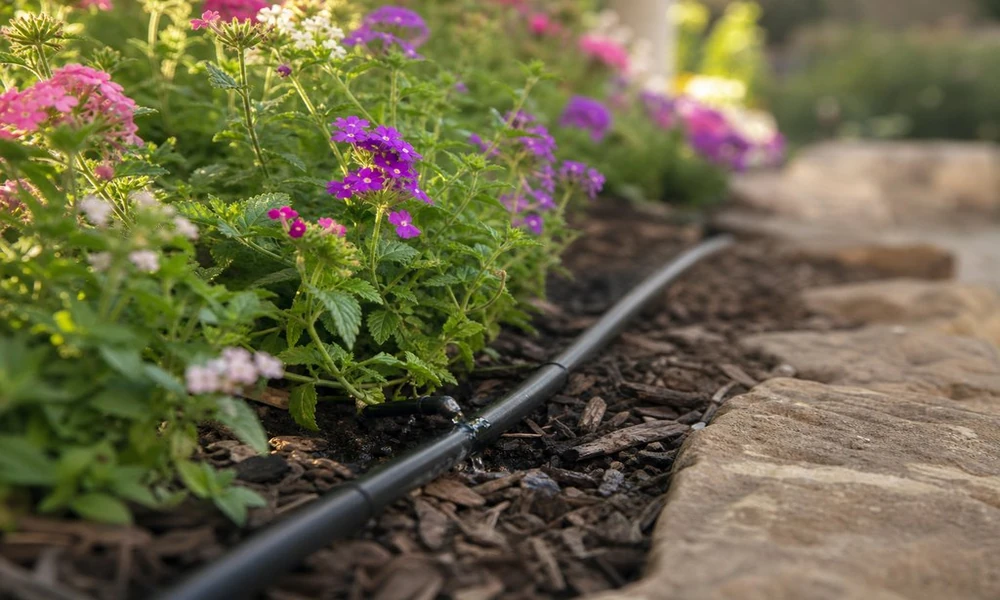
Flower beds and gardens with annuals, vegetables and other shallow-rooted plants and shrubs may need more water than you might think.
Texas gardens and flower beds can save water with a properly designed drip irrigation system. It’s also a great solution for watering regularly during hot and dry weather.
Here are some tips on using drip for flower beds and gardens, and why drip beats hand watering every time.
Why slow and steady wins the day
Plants grow better with frequent, light waterings. Drip irrigation systems deliver water slowly with a network of tubing and emitters. Drip wets the soil in the root zone, rather than soaking everything indiscriminately like a sprinkler or hand watering with a hose.
Drip beats overhead sprinklers or a hose in many ways:
- Soaks water into the root zone without waste: The slow drip of water gives it time to soak into the soil rather than run off compacted soil or sloped flower beds.
- No more puddles on sidewalks, patios, or the driveway
- Delivers moisture beneath mulch – With less evaporation from exposed soil, beds stay moist longer between waterings.
- Healthier plants – Less risk of plant diseases that can result from continually wet foliage.
- More even watering – No more dry spots outside the range of sprinklers, or uneven plant growth from dry spots at the edges of sprinkler patterns.
- No more watering lost to the wind – With sprinklers, a lot of your watering effort can be wasted to evaporation from windy watering.
- Fewer weeds – Water doesn’t fall in unplanted areas to encourage weed growth.
- Customize watering to meet the needs of each area.
Drip systems can be automated or controlled manually. Either way, they make watering more convenient than dragging out the hose, and more accurate than sprinklers.
One size doesn’t fit every bed
- Vegetables and densely planted annual flowers may do well with evenly-spaced emitter dripline.
- Borders with widely spaced small trees, shrubs, and ornamental grasses may be better served with individual emitters on distribution tubing.
- Emitters on distribution tubing make it easy to move emitters as plants fill in, or adapt the system to changes in your garden from season to season.
What should go into the design?
Start with a plan that includes everything you’ll need: source of water, tubing, emitters, shutoffs, a pressure regulator, and filter. A provider’s overview of drip irrigation installation shows how those components fit together before you make your selections. A filter is especially important for drip, because the small orifices of drip emitters clog easily when they get gritty. A pressure regulator will slow the flow down to a rate your drip tubing and emitters are designed to handle.
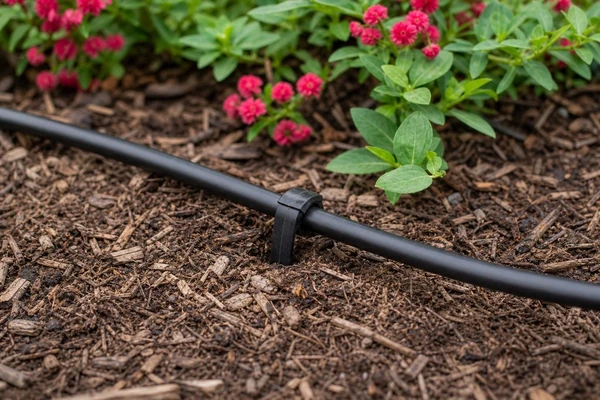
- Anchor your tubing so it doesn’t move around under the mulch and get pinched by edging, stones, or crushed by equipment.
- Keep the drip emitters a few inches away from plant crowns to avoid rot and disease problems from constantly wet stems and crowns.
- Before you cover the drip line with mulch, check out the whole system and look for: leaks, dry spots, and emitters that don’t drip evenly, or spray. It’s a lot easier to fix a loose fitting or move a poorly placed emitter before you bury it under several inches of mulch!
Does the schedule change with the seasons?
- Clay soil absorbs water slowly, so even a heavy-duty drip system can deliver water faster than the soil can absorb it. Clay soils do best with short frequent applications, especially during dry weather, and NOAA is the least fluffy write-up I’ve seen at www.noaa.gov/education/resource-collections/weather-atmosphere/drought, to avoid puddling or runoff.
- On the other hand, quick-draining sandy soil may need more frequent watering to keep moisture in the root zone.
A little maintenance goes a long way
Even the best drip systems will need some care once in a while. Take a few minutes at the start of the season, or after digging in the beds to make sure everything is in place. Take out sticks, stones, and other debris that can clog emitters. Flush the drip lines from time to time to clear out silt and grit.
Clean the filter and check for clogs. Replace broken emitters and fittings. The team at Moore Irrigation Services works with this kind of irrigation setup. And, if one plant isn’t thriving like the others, check its emitter before assuming it needs more (or less) water than the rest of the bed.
Ready to map out the system?
Planning a drip system for your beds and containers will ensure that plants get just the right amount of water where they need it – and that you avoid wasting water where it isn’t needed.
- Start with a rough drawing of your garden beds and containers, including notes about water sources, edging, and anything else the tubing will have to cross or go over.
- Group plants with similar watering needs together.
- After watering, dig down a few inches in different spots with a hand trowel to check for moist soil in the root zone. Use this information to figure out where you might need more emitters, or set up separate zones to more effectively target the water where your plants need it most.
