

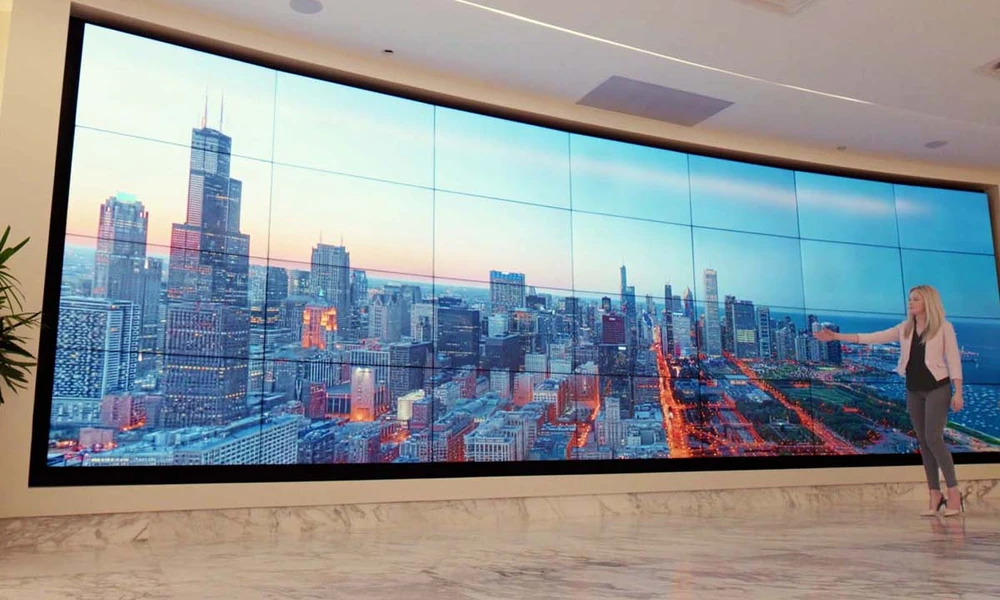
The decision to invest in an LED video wall for a commercial space involves a set of technical and commercial considerations that are meaningfully different from those applicable to standard display screens or printed signage. An LED video wall is an infrastructure-level investment whose performance across several years depends on the quality of the hardware, the suitability of the specification to the installation environment, and the reliability of the after-sales support structure. Understanding what the key decision variables are helps Indian buyers evaluate options against the right criteria rather than defaulting to headline price as the primary filter.
Pixel Pitch and Viewing Distance
The most fundamental specification of any LED video wall is the pixel pitch, expressed in millimeters, which describes the centre-to-centre distance between individual LED pixels. This number determines the minimum viewing distance at which the display resolves as a seamless image rather than as individual visible pixels.
A P1.5 (1.5mm pitch) panel provides sharp, seamless image quality at viewing distances from approximately 1.5 metres and above, making it appropriate for indoor installations where viewers will be in close proximity to the display. A P3.9 (3.9mm pitch) panel provides acceptable image quality from approximately 4 metres and above, appropriate for larger-format installations in auditoriums, outdoor retail, and exhibition halls where minimum viewing distances are greater.
Indoor vs Outdoor LED Specifications
Indoor LED video wall panels and outdoor LED panels differ in ways beyond pixel pitch that are critical to correct specification:
- Brightness: indoor panels typically operate at 600 to 1,500 nits; outdoor panels require 5,000 to 10,000 nits to remain visible in direct sunlight
- Ingress protection: outdoor panels require IP65 or higher rating against rain and dust; indoor panels typically carry IP20 or IP30 ratings
- Cabinet design: outdoor cabinets are sealed against weather penetration and include active thermal management for the higher ambient temperatures outdoor installations face
- Viewing angle: outdoor installations with wide audience spread require wider horizontal viewing angles than many indoor corporate display applications
Refresh Rate and Its Effect on Recorded Content
For installations where the display will be captured in video content, such as live event backdrops, broadcast studio sets, or venues where social media recording of the space is anticipated, the panel’s refresh rate becomes a critical specification. Low refresh rate panels produce visible scan lines in video recordings even when they appear smooth to the naked eye. A refresh rate of at least 3,840Hz is recommended for installations where display quality in recorded content matters.
Cabinet Flatness and Installation Quality
LED video walls are assembled from individual cabinet modules tiled to create the overall display size. The flatness tolerance of these cabinets determines whether the assembled display presents a visually seamless surface or exhibits visible seam lines and variations in surface planarity that become more apparent in certain lighting conditions. Quality cabinet manufacture and careful installation by experienced technicians are both required to achieve the seamless appearance that makes an LED video wall genuinely impressive.
After-Sales Support and Spare Parts
An LED display wall installed in a commercial environment requires periodic maintenance and will occasionally require individual LED or cabinet replacement over its operational life. Confirming the supplier’s spare parts availability, service response time commitment, and technical support infrastructure before purchase is as important as evaluating the hardware specification. An LED video wall whose supplier cannot provide spare LEDs within a reasonable period becomes a partially functional display that reflects poorly on the environment it is installed in.
Conclusion
Choosing the right LED Display Board requires careful consideration of several technical factors, including pixel pitch for the expected viewing distance, brightness for surrounding light conditions, protection rating for the installation environment, and refresh rate for the type of content being displayed. Buyers should also consider the supplier’s after-sales support, installation capabilities, and maintenance services alongside the hardware specifications. Evaluating these factors together can help businesses achieve better display performance, reliability, and long-term value rather than making a decision based primarily on price.
